

This article is for informational purposes only and does not constitute financial or investment advice. Always consult a qualified real estate professional before making any purchasing or investment decisions.
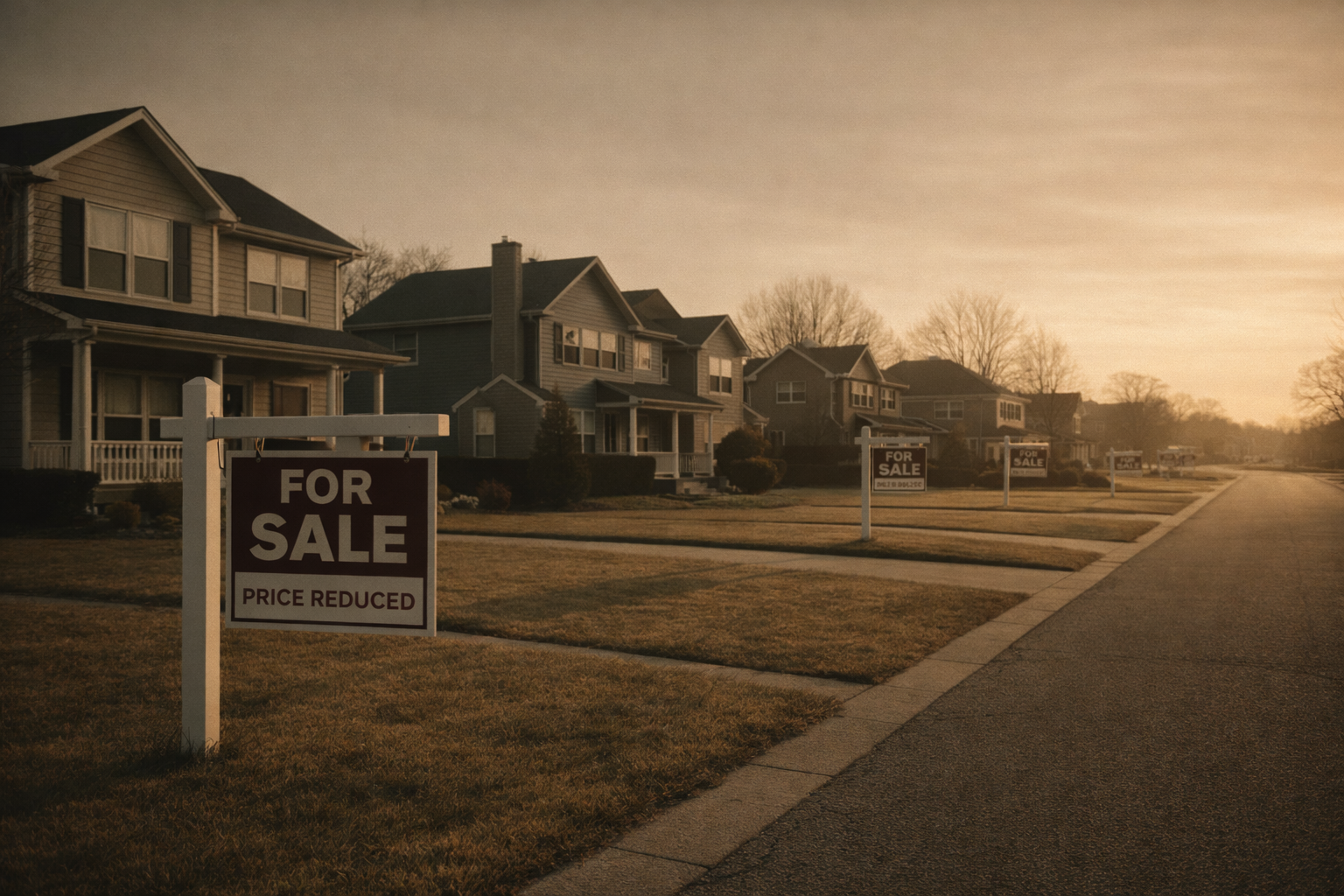
Picture this: a townhouse in Atlanta that sold in 2021 near the peak of the pandemic boom, changed hands again in 2023, and is now available at a price that is meaningfully below both of those transactions. The seller is motivated. The property has been sitting on the market for months. And the buyer who shows up with financing already in place and a willingness to make a confident offer below the asking price walks away with a deal that, by some measures, comes close to meeting the 1% rent-to-price rule that real estate investors have long used as a rough benchmark for cash flow viability.
That kind of transaction was essentially impossible in 2021. It is becoming more common in 2026 – and the reasons why have as much to do with Washington policy decisions as they do with mortgage rates or local market dynamics.
Something is shifting in the U.S. housing market. Corporate landlords – the large institutional investors that spent the better part of the last decade acquiring single-family homes at scale – are pulling back. Federal policy is actively discouraging their continued purchases. Sun Belt markets that attracted the most aggressive institutional buying are now seeing price declines. And individual buyers who arrive prepared and patient are finding negotiating leverage that has been absent from this market for years.
Understanding what is driving that shift, where it is most pronounced, and how to navigate it is what this article is about.
The Federal Policy Shift That Is Changing the Market
The most significant structural change in the single-family housing market in early 2026 is not a change in mortgage rates or housing supply. It is a change in federal policy toward large institutional investors – and it is moving faster than most market observers anticipated.
In January 2026, a White House executive order directed federal agencies to take steps to prevent large institutional investors from acquiring single-family homes and to prioritize sales to owner-occupants instead. The policy rationale is straightforward: institutional investors acquiring single-family homes at scale have been identified as a contributing factor to the affordability crisis that has priced many first-time buyers out of the market. By directing federal agencies to restructure how federally-backed properties are sold — and by signaling regulatory pressure on institutional buyers more broadly – the executive order represents a meaningful shift in the federal government’s posture toward corporate landlordism in the single-family sector.
In March 2026, the Senate passed the 21st Century ROAD to Housing Act, which would bar investors owning more than 350 single-family homes from purchasing additional properties. If enacted into law, the legislation would effectively cap the growth of the largest single-family rental platforms and force some to evaluate whether their existing portfolios remain optimal to hold.
These policies do not immediately remove institutional investors from the market. Existing portfolios are not affected by purchase restrictions. But the combination of a regulatory environment that is actively hostile to new acquisitions and an economic environment in which rental yields have compressed and financing costs remain elevated creates a powerful incentive for institutional landlords to evaluate their positions — and in many cases, to sell.
Corporate Landlords Are Already Pulling Back
The policy environment is reinforcing economic pressures that were already pushing institutional investors toward the exit. The arithmetic of single-family rental investment has deteriorated significantly from the conditions that made the strategy attractive in 2012 to 2020.
During that period, institutional investors acquired hundreds of thousands of single-family homes — particularly in Sun Belt markets — at prices that supported strong rental yields relative to acquisition costs. As home prices rose dramatically during the pandemic, the yield compression that accompanied higher acquisition costs began to erode the return profile of new purchases. ATTOM data indicates that rental yields have tightened in more than half of U.S. counties, as acquisition costs have risen faster than rents in many markets.
Sustained mortgage rates above 6% have compounded the problem. For institutional landlords that use debt to finance their portfolios — which most do — the cost of capital has risen substantially from the sub-4% environment that prevailed when many of their properties were acquired. Refinancing existing debt at higher rates, or financing new acquisitions at current rates, reduces the cash flow profile of single-family rental investment in ways that affect return modeling across the largest platforms.
The result is a market in which some corporate landlords are making the calculation that selling properties — particularly in markets where price appreciation has allowed them to realize gains — is more attractive than holding. In Sun Belt markets where price declines are already underway, the calculus is more urgent: selling now, even at prices below recent peaks, may be preferable to holding through a continued correction.
Where Prices Are Already Falling
The geographic concentration of the current price correction is not random. It maps closely onto the markets that attracted the most aggressive institutional investment and the most pronounced pandemic-era price appreciation — and it is most visible in Sun Belt states.
According to Zillow data reported by Fortune, home prices in Texas have declined approximately 2.4% year-over-year in early 2026. In Florida, the decline is more pronounced — approximately 5.1% year-over-year. These are not catastrophic numbers in isolation, but they represent a meaningful reversal in markets that saw 30 to 50% appreciation during the pandemic boom, and they are occurring against a backdrop of rising inventory and declining demand that suggests the correction has further to run in some submarkets.
J.P. Morgan’s research team has projected that national home prices will be roughly flat in 2026 on an aggregate basis, with larger declines likely in oversupplied Sun Belt markets. That forecast reflects the bifurcated nature of the current correction: markets in the Midwest and Northeast that did not experience extreme pandemic-era overvaluation are holding up considerably better than the Sun Belt markets where overbuilding and slowing migration are creating more acute supply-demand imbalances.
Nationally, home prices remain near record highs in nominal terms — a reflection of the extraordinary appreciation of the pandemic years that has not fully reversed despite the correction underway in specific markets. The important analytical point, as discussed in prior analyses on this site, is that nominal price levels relative to the pandemic peak are not the right measure of value. The relevant metric is where prices sit relative to local income levels and long-run affordability norms — and on that measure, meaningful overvaluation persists in many markets even after significant corrections have already occurred.
Inventory is rising in the markets experiencing the most acute corrections. Listings are sitting on the market longer — a trend that is itself a leading indicator of continued price pressure, as sellers who cannot transact at asking prices are eventually forced to choose between reducing their price, converting to rental, or delisting entirely.
The Rise of the Accidental Landlord
One of the more nuanced dynamics shaping the rental market in early 2026 is the emergence of what housing analysts are calling “accidental landlords” — homeowners who intended to sell their properties but, unable to find buyers at their desired price, have opted to rent them out instead.
Zillow’s research found that in late 2025, a near-record number of would-be sellers made this choice, adding single-family rental supply to markets that were already receiving new apartment deliveries from the construction pipeline permitted during the pandemic years. National Mortgage News reported that accidental-landlord units accounted for approximately 2.3% of rental listings in October 2025 — just shy of the record 2.4% share recorded in 2022.
This phenomenon has several important implications for both the rental and for-sale markets. On the rental side, the additional supply of single-family homes converting to rentals — combined with elevated new apartment deliveries — has slowed rent growth considerably. Zillow data shows single-family rent growth decelerating to approximately 2.6% annually, a significant moderation from the double-digit rent increases that characterized 2021 and 2022. For renters, this means more options and more negotiating leverage than they have had in years.
For the for-sale market, the accidental landlord dynamic has a more complex effect. Homeowners who rent rather than sell are not adding to for-sale inventory — they are holding their properties off the market while renting them out. This suppresses the supply of homes available for purchase, which provides some support to prices even as buyer demand weakens. It is one of several forces — alongside the mortgage rate lock-in effect discussed in prior articles — that is slowing the price correction in markets where fundamentals would otherwise suggest a faster adjustment.
The accidental landlord trend also introduces a deferred supply dynamic. Homeowners who are currently renting their properties rather than selling are not permanent landlords in most cases. If rental income proves insufficient to cover carrying costs, or if the rental market softens to the point that rents fall below what is needed to service the mortgage and cover expenses, some of these accidental landlords will eventually return their properties to the for-sale market — adding supply at a point when buyer demand may still be constrained.
What Rising Inventory and Corporate Selling Mean for Individual Buyers
The combination of institutional investor retreat, rising inventory, longer days on market, and slowing price growth creates a market environment that is meaningfully more favorable for prepared individual buyers than anything seen in the past several years.
The negotiating leverage that evaporated entirely during the 2020 to 2022 frenzy — when homes routinely received multiple offers above asking price within days of listing — is returning in the markets experiencing the most acute corrections. Days on market in Sun Belt metros have extended considerably. Price reductions on active listings have become more common. Sellers who have been unable to transact at their desired prices for months are more receptive to offers that reflect current market reality rather than peak-era expectations.
The buyer strategies that are working in this environment share a few consistent characteristics. Focusing on markets where the correction is most advanced — where inventory is elevated, days on market are extended, and price reductions are common — concentrates negotiating leverage where it is greatest. Targeting listings that have been on the market for six months or longer identifies sellers who have already demonstrated that their current asking price is not finding a buyer, which creates a natural negotiating opening. Arriving with financing already in place — a pre-approval letter or the ability to close in cash — removes the uncertainty that makes sellers cautious about accepting below-ask offers from buyers whose financing is untested.
The Atlanta townhouse example that opened this article illustrates how these conditions can combine. A property that transacted near the pandemic peak, changed hands again more recently at an elevated price, and is now sitting unsold for months is a property whose seller has likely already absorbed the psychological adjustment required to accept a below-peak offer. The buyer who arrives prepared — with financing confirmed, with a clear understanding of what comparable properties have actually sold for rather than what they are listed for, and with the patience to make and wait on a confident offer — is in a fundamentally different position than the frantic buyers who competed for homes in 2021.
The Financing Reality That Buyers Need to Understand
Mortgage rates remaining above 6% — and showing no clear near-term path back to the sub-4% environment that prevailed during the pandemic — is the central constraint on housing demand in 2026. Understanding its implications is essential for any buyer evaluating the current market.
At current rate levels, the monthly payment on a median-priced home represents approximately one-third or more of gross household income for the median American household — a level that housing economists have historically associated with market stress and that prices a meaningful share of would-be buyers out of participation. This is the arithmetic that underlies the demand weakness visible across many markets and that is keeping transaction volumes depressed despite a growing inventory of homes.
For buyers who can qualify at current rates, however, that same affordability constraint is working in their favor in the negotiating dynamic. Sellers who have been waiting for a recovery in buyer demand that has not arrived — and who are increasingly aware that the pool of qualified buyers at current rates is smaller than it was — are more likely to negotiate on price, concessions, and closing cost assistance than they would be in a competitive market.
The buyers most advantaged in the current environment are those who can qualify comfortably at current rates — not stretching to the edge of their qualification limit — and who have sufficient liquidity to make a meaningful down payment and cover closing costs without depleting their financial reserves. That combination of qualifying power, liquidity, and patience is the profile that the current market rewards.
What the Policy Changes Could Mean Going Forward
The January executive order and the Senate’s passage of the 21st Century ROAD to Housing Act represent the most significant federal intervention in the single-family housing market in years — but their ultimate impact will depend on implementation details and on whether the legislation ultimately becomes law.
If the 350-home threshold in the Senate bill becomes law, it would not immediately shrink the existing portfolios of the largest institutional landlords — current holdings would be grandfathered. But it would prevent those platforms from growing through new acquisitions, and it would signal a regulatory environment in which the long-term expansion of institutional single-family rental at scale faces meaningful political and legal headwinds. Over time, that signal may accelerate the divestiture decisions that the current economic environment is already prompting.
The more immediate effect may be on market psychology. The announcement of federal intent to limit institutional purchases — regardless of the ultimate legislative outcome — may discourage some institutional buyers from making new acquisitions in markets where they anticipate regulatory risk. If that effect is real and measurable, it reduces one source of demand competition for individual buyers in markets where institutional activity has been most pronounced.
There are legitimate questions about how significant the practical impact will be. Institutional investors own a small percentage of the total single-family housing stock nationally — their concentration in specific markets, particularly Sun Belt metros, is higher than their national share suggests, but they are not the primary driver of prices in most individual markets. Policies that limit their new purchases may have more impact on market psychology and on the supply of distressed or value-add single-family properties than on aggregate price levels.
Approaching This Market With the Right Framework
The housing market in early 2026 is not a simple story. It is not a crash, and it is not a recovery. It is a bifurcated, regionally uneven, policy-influenced environment in which the conditions for individual buyers are improving in specific markets while remaining difficult in others.
The markets where the opportunity for prepared individual buyers is most visible are those where institutional investor retreat is combining with elevated inventory, extended days on market, and meaningful price corrections from pandemic-era peaks. Sun Belt markets — particularly in Florida and Texas — fit that description more consistently than most other regions right now.
The framework for evaluating any specific opportunity in this environment comes back to the same fundamentals discussed in prior analyses on this site: where does the asking price sit relative to local income levels and long-run affordability norms, not relative to the pandemic peak? What does the rental market in the specific submarket support in terms of yield? How does the property’s days-on-market history position the seller relative to a below-ask offer? And does the buyer’s financial position — qualification, liquidity, and willingness to hold through continued market uncertainty — support the purchase regardless of short-term price movements?
The combination of federal policy shifts, institutional investor retreat, rising inventory, and regional price corrections is creating conditions that reward patient, prepared, data-informed individual buyers in ways that have not been visible in this market for several years. Whether those conditions persist, deepen, or reverse will depend on the trajectory of mortgage rates, the pace of institutional divestiture, the legislative fate of the Senate bill, and the degree to which regional overbuilding continues to weigh on Sun Belt prices.
What is clear is that the market of 2026 is not the market of 2021 — and buyers who approach it with the analytical tools appropriate to the current environment, rather than the fear and urgency that defined the pandemic frenzy, are the ones most likely to find genuine value.
Conclusion
The forces reshaping the U.S. single-family housing market in early 2026 are real, data-supported, and consequential for individual buyers willing to do the work of understanding them. Federal policy is actively discouraging institutional purchases and redirecting supply toward owner-occupants. Corporate landlords are evaluating their portfolios against a backdrop of compressed yields and elevated financing costs. Sun Belt prices are declining in markets that overshot sustainable valuations during the pandemic. Accidental landlords are adding rental supply, moderating rent growth, and creating a deferred pool of potential for-sale inventory.
For individual buyers who have been waiting on the sidelines — frustrated by prices that seemed impossibly high, by competition from institutional buyers with cash advantages, or by a market that moved too fast for careful decision-making — the environment of 2026 is more favorable than any point in the past several years in the markets experiencing the sharpest corrections.
That does not mean every market is a buying opportunity. It does not mean prices cannot fall further in some markets before they stabilize. And it does not mean the affordability problem that has kept millions of potential buyers out of the market has been solved. What it means is that the conditions for patient, prepared, analytically rigorous buyers are improving — and that the window of opportunity created by institutional retreat, rising inventory, and policy-driven supply shifts is worth examining carefully.
Research the specific market. Understand the local income fundamentals. Get your financing confirmed before you make an offer. And approach the negotiation with the confidence that comes from knowing the data — not from reacting to either the fear of missing out or the fear of catching a falling knife.